




 In your cart

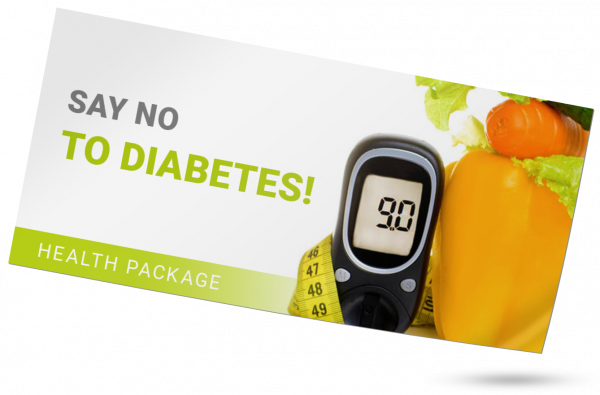
Diabetes (second type) is the frequent civilizational illness. The high level of sugar doesn’t hurt and can cause grave illnesses. This test is suitable for its detection and for the treatment check (for older than 25 years).
EN

Total protein includes a large group of plasma proteins whose important functions include maintaining oncotic blood pressure, transporting many substances, protecting against infection, enzyme activity, blood coagulation, damping blood pH fluctuations, and acting against oxidative stress. Total protein is determined by a method that provides information on the formation, use, and secretion of proteins in the body. Most commonly, the total protein level in the blood is determined as part of examination for blood diseases, inflammation, nutritional status, and liver and kidney diseases.
HIDE DESCRIPTION
The creatinine value is related to kidney functions. If its level is elevated, the kidneys are not working properly. Normal values range between 44.0-84.0 μmol / l in healthy women and between 60.0-104.0 μmol / l in a healthy man.
HIDE DESCRIPTION
Uric acid is a natural waste product of digestion of substances called purines. A healthy body can excrete excess uric acid through urine. Disruption of this process often indicates gout.
HIDE DESCRIPTION
Bilirubin may indicate hepatic damage, liver disease, biliary tract closure, hemolytic anemia, or a metabolic problem related to liver functions.
HIDE DESCRIPTION
Bilirubin is an important indicator of liver disease. Elevated conjugated bilirubin in the blood is particularly indicative of possible liver disease. Conjugated bilirubin secretion disorder also occurs when the bile flow in the biliary tract is reduced.
HIDE DESCRIPTION
A normal ALT value is an indicator of proper liver functions. Normal values in adults are 0.1-0.78 μkat / l.
HIDE DESCRIPTION
AST examinations are usually used to detect liver damage. AST levels are also often compared to levels of other liver enzymes, alkaline phosphatase (ALP) and alanine aminotransferase (ALT) to determine the type of liver disease.
HIDE DESCRIPTION
GGT is an indicator of chronic liver tissue stress during detoxification. Normal values are up to 0.84 μkat / l in a healthy man and up to 0.68 μkat / l in a healthy woman.
HIDE DESCRIPTION
Alkaline phosphatase is an enzyme that promotes cell activity. ALP activity increases as a result of liver diseases (especially in the case of bile ducting) and bone disorders. Elevated levels of ALP are common during childhood, adolescence, and pregnancy.
HIDE DESCRIPTION
Pancreatic amylase is an enzyme produced by the pancreas during the digestion of sugars taken from food. Its increased activity may indicate pancreatic disease.
HIDE DESCRIPTION
Pancreatic lipase is a digestive enzyme that is formed in the pancreas and released into the small intestine where it is involved in fat digestion along with bile. An increase in pancreatic lipase in the blood is a sign of pancreatic damage.
HIDE DESCRIPTION
An excessively high total cholesterol level brings many health risks, such as arteriosclerosis and its serious consequences. Normal values are up to 5.00 mmol / l.
HIDE DESCRIPTION
Triacylglycerols are fats stored in fat tissue and serve as a reservoir of energy. Their elevated level in blood is one of the risk factors of fat attaching itself to arterial walls and the subsequent complications due to insufficient blood flow to the organs. Normal values in adults are 0.68-1.69 mmol / l.
HIDE DESCRIPTION
HDL cholesterol is also referred to as "good" cholesterol, i.e. the one that protects our cardiovascular system. In simple terms, the higher the HDL level the better. The reference values range from 1.20 to 2.70 mmol / l.
LDL cholesterol is a blood fat that affects the health of our hearts and blood vessels. It's also referred to as the "bad" cholesterol, so we should try to keep its level as low as possible, with reference values up to 3.00 mmol / l.
HIDE DESCRIPTION
This is a valuable indicator of the risk of atherosclerosis calculated as the difference between total cholesterol and HDL cholesterol. The normal values are 1.50-3.80 mmol / l.
HIDE DESCRIPTION
This parameter may accompany ovarian cell transformation.
HIDE DESCRIPTION
The HE4 hormone is excessively produced by the ovaries after cell transformation, so it can be an indicator of ovarian cancer.
HIDE DESCRIPTION
The ROMA index displays the probability of the presence of an epithelial ovarian carcinoma. The evaluation is different before and after menopause.
HIDE DESCRIPTION
Elevated values of the Prostate Specific Antigen (PSA) may indicate early stage prostate cancer. Its normal values are up to 2.50 μg / l.
HIDE DESCRIPTION
fPSA is one of the PSA forms that can be specifically examined. If the PSA levels are between 4 - 10 ng / mL, fPSA should also be determined. The resulting concentration of fPSA is not evaluated, but the ratio of fPSA / PSA x 100 concentrations (in percent) is.
HIDE DESCRIPTION
2proPSA is a sensitive parameter that helps to clarify the risk of prostate cancer.
HIDE DESCRIPTION
The PHI parameter is the so-called Prostate Health Index calculated from PSA and 2proPSA levels. A PHI below 30 means a low probability of cancer.
HIDE DESCRIPTION
A higher concentration irritates blood vessels and roughens their surface. The "bad" LDL cholesterol adheres to them easier and thus increasing the threat of atherosclerosis, resulting in narrowing and even blockage of the blood vessels (normal values range between 3.00-17.00 μmol / l).
HIDE DESCRIPTION
This parameter is related to creatinine concentration, which is a value that indicates proper kidney functions.
HIDE DESCRIPTION
The presence of albumin in urine always signals a renal glomerulus defect.
HIDE DESCRIPTION
Vitamin D is primarily involved in growth and bone health, but it also has other important tasks in the mechanisms responsible for high blood pressure and cardiovascular diseases, stroke, and the immune system's readiness to fight infection. Most of the population lacks vitamin D.
HIDE DESCRIPTION
Hematocrit is the ratio of the volume of red blood cells to the total volume of blood depending on the number and size of the red blood cells.
Blood count includes these individual examinations:
Blood count - Hematocrit (HTC)
Blood count - Hemoglobin (HGB)
Blood count - Mean Erythrocyte Volume (MCV)
Blood count - Mean Corpuscular Hemoglobin (MCH)
Blood count - Mean Corpuscular Hemoglobin Concentration (MCHC)
Blood count - Thrombocytes
Blood count - Erythrocytes (RBC)
Blood count - Leukocytes (WBC)
Purchasing one of the above examinations will automatically add other blood count examinations.
HIDE DESCRIPTION
Hemoglobin is the red transport metalloprotein of red blood cells. The main function of hemoglobin is the transport of oxygen from the lungs to tissues and carbon dioxide removal in the opposite direction.
Blood count includes these individual examinations:
Blood count - Hematocrit (HTC)
Blood count - Hemoglobin (HGB)
Blood count - Mean Erythrocyte Volume (MCV)
Blood count - Mean Corpuscular Hemoglobin (MCH)
Blood count - Mean Corpuscular Hemoglobin Concentration (MCHC)
Blood count - Thrombocytes
Blood count - Erythrocytes (RBC)
Blood count - Leukocytes (WBC)
Purchasing one of the above examinations will automatically add other blood count examinations.
Mean Cell Volume (MCV) is the average volume of a red blood cell. A red blood cell with a smaller volume is referred to as a microcyte and ones with a larger volume are macrocytes. A certain proportion of microcytes and macrocytes normally occur In the blood of a healthy adult. Multiplication of the number of microcytes is referred to as microcytosis, and multiplication of the number of macrocytes is reffered to as macrocytosis. Microcytosis is typical for anaemia caused by iron deficiency. Macrocytosis occurs physiologically in neonates from pathological conditions and it is typical for anaemia due to lack of folic acid or vitamin B12.
Blood count includes these individual examinations:
Blood count - Hematocrit (HTC)
Blood count - Hemoglobin (HGB)
Blood count - Mean Erythrocyte Volume (MCV)
Blood count - Mean Corpuscular Hemoglobin (MCH)
Blood count - Mean Corpuscular Hemoglobin Concentration (MCHC)
Blood count - Thrombocytes
Blood count - Erythrocytes (RBC)
Blood count - Leukocytes (WBC)
Purchasing one of the above examinations will automatically add other blood count examinations.
Mean Corpuscular Hemoglobin - MCH, shows the average amount of hemoglobin in the cell. It determines whether the anemia is hypochromic or normochromic.
Blood count includes these individual examinations:
Blood count - Hematocrit (HTC)
Blood count - Hemoglobin (HGB)
Blood count - Mean Erythrocyte Volume (MCV)
Blood count - Mean Corpuscular Hemoglobin (MCH)
Blood count - Mean Corpuscular Hemoglobin Concentration (MCHC)
Blood count - Thrombocytes
Blood count - Erythrocytes (RBC)
Blood count - Leukocytes (WBC)
Purchasing one of the above examinations will automatically add other blood count examinations.
HIDE DESCRIPTION
Mean Cell Hemoglobin (MCH) is the average quantity of hemoglobin in one erytrocyte.
Blood count includes these individual examinations:
Blood count - Hematocrit (HTC)
Blood count - Hemoglobin (HGB)
Blood count - Mean Erythrocyte Volume (MCV)
Blood count - Mean Corpuscular Hemoglobin (MCH)
Blood count - Mean Corpuscular Hemoglobin Concentration (MCHC)
Blood count - Thrombocytes
Blood count - Erythrocytes (RBC)
Blood count - Leukocytes (WBC)
Purchasing one of the above examinations will automatically add other blood count examinations.
HIDE DESCRIPTION
Thrombocytes are nucleus-free blood elements that play an irreplaceable role in stopping bleeding.
Blood count includes these individual examinations:
Blood count - Hematocrit (HTC)
Blood count - Hemoglobin (HGB)
Blood count - Mean Erythrocyte Volume (MCV)
Blood count - Mean Corpuscular Hemoglobin (MCH)
Blood count - Mean Corpuscular Hemoglobin Concentration (MCHC)
Blood count - Thrombocytes
Blood count - Erythrocytes (RBC)
Blood count - Leukocytes (WBC)
Purchasing one of the above examinations will automatically add other blood count examinations.
HIDE DESCRIPTION
Red blood cells (erythrocytes) are among the most important cells of the body, especially for their ability to transmit blood gases.
Blood count includes these individual examinations:
Blood count - Hematocrit (HTC)
Blood count - Hemoglobin (HGB)
Blood count - Mean Erythrocyte Volume (MCV)
Blood count - Mean Corpuscular Hemoglobin (MCH)
Blood count - Mean Corpuscular Hemoglobin Concentration (MCHC)
Blood count - Thrombocytes
Blood count - Erythrocytes (RBC)
Blood count - Leukocytes (WBC)
Purchasing one of the above examinations will automatically add other blood count examinations.
HIDE DESCRIPTION
A leukocyte is a white blood cell. The main function of leukocytes is the mediation of immune responses.
Blood count includes these individual examinations:
Blood count - Hematocrit (HTC)
Blood count - Hemoglobin (HGB)
Blood count - Mean Erythrocyte Volume (MCV)
Blood count - Mean Corpuscular Hemoglobin (MCH)
Blood count - Mean Corpuscular Hemoglobin Concentration (MCHC)
Blood count - Thrombocytes
Blood count - Erythrocytes (RBC)
Blood count - Leukocytes (WBC)
Purchasing one of the above examinations will automatically add other blood count examinations.
HIDE DESCRIPTION
Rheumatoid factor is an indicator of rheumatoid arthritis. This disease first manifests itself in pain, inflammation, and swellings that lead to joint deformities and joint disorders.
Examination of the rheumatoid factor should be supplemented by further examinations, such as the determination of CRP and anticitrulin antibodies. However, timely laboratory diagnosis is important because the sooner the disease is treated, the better for the patient and his or her joints.

Keep your health under control with your smart phone.
The NEXTLIFE application is now available free of charge in the App Store and Google Play.






 Mobile App
 How it works
 Blood Collection Points